Sumatra Barokah Bersama
Whole Beans 250 grAM
189.00 kr
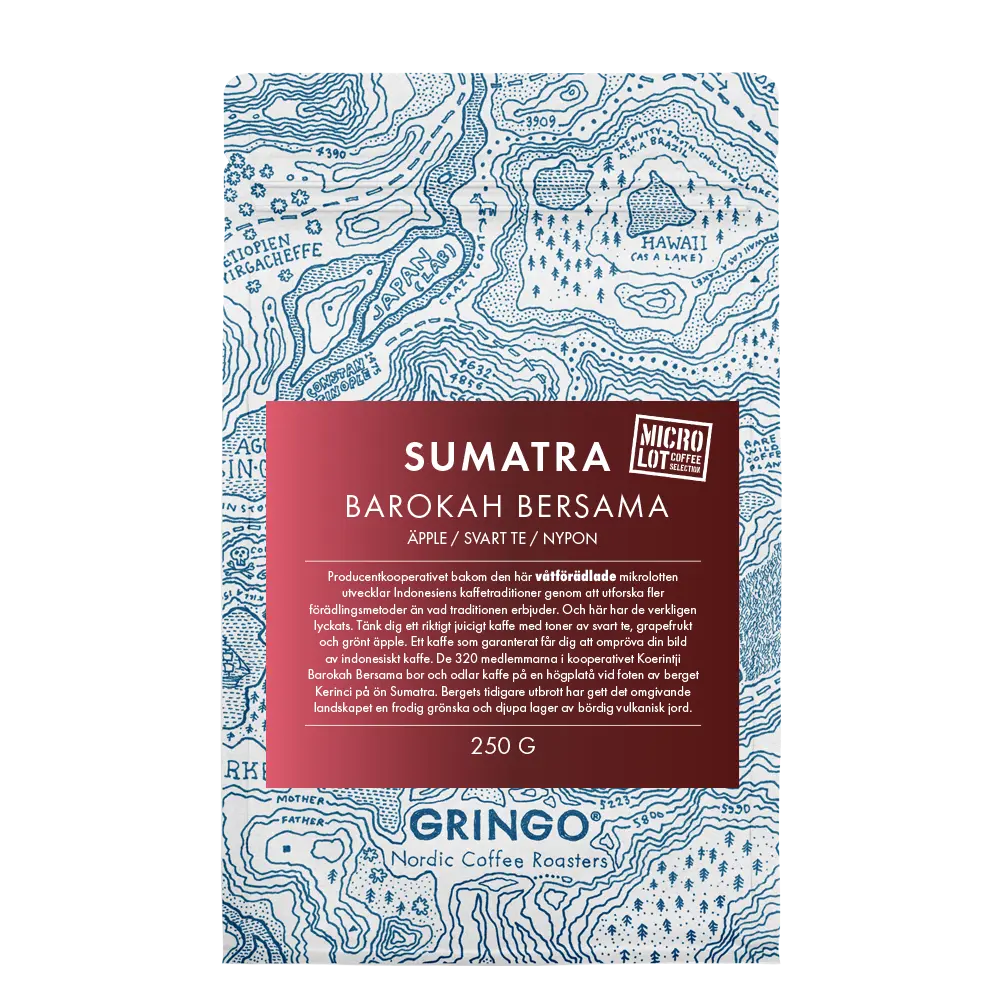
The producer cooperative behind this fully washed coffee is expanding Indonesia’s coffee traditions by exploring different processing methods, constantly experimenting and evolving. This is their Wet processed coffee, and we think it’s amazing. Think super juicy, with notes of black tea, grapefruit and green apple. A coffee that’s sure to make you rethink what you know about Indonesian coffee.
ABOUT THE KOERINTJI BAROKAH BERSAMA COOPERATIVE
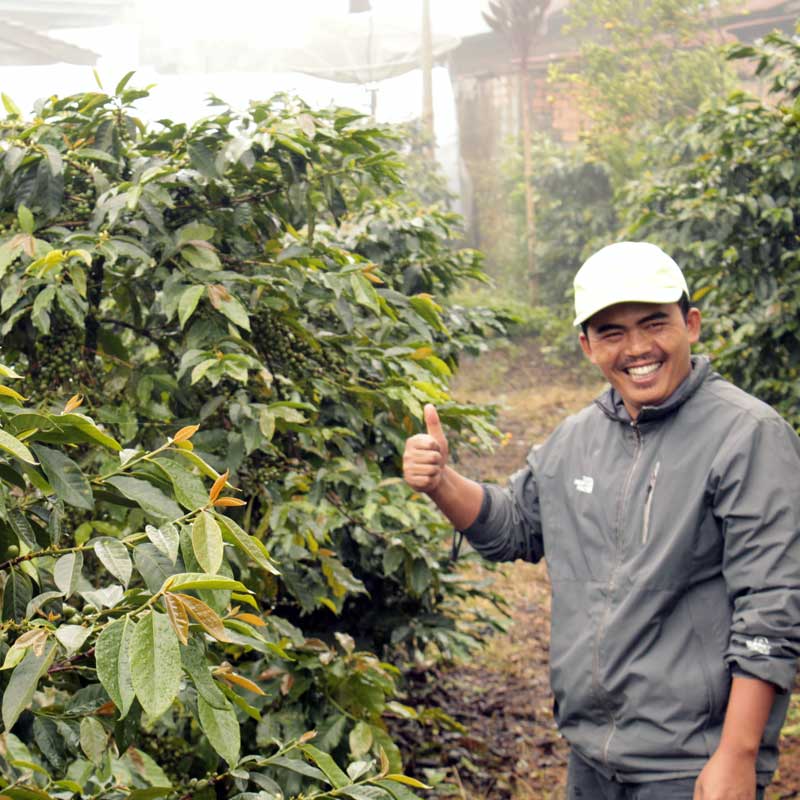
The cooperative Koerintji Barokah Bersama has 320 members and they grow coffee at an altitude of 1400–1700 meters in Gunung Tujuh, Kerinci, Sumatra. The varieties are local with names like Andung Sari and Sigarar Utang.
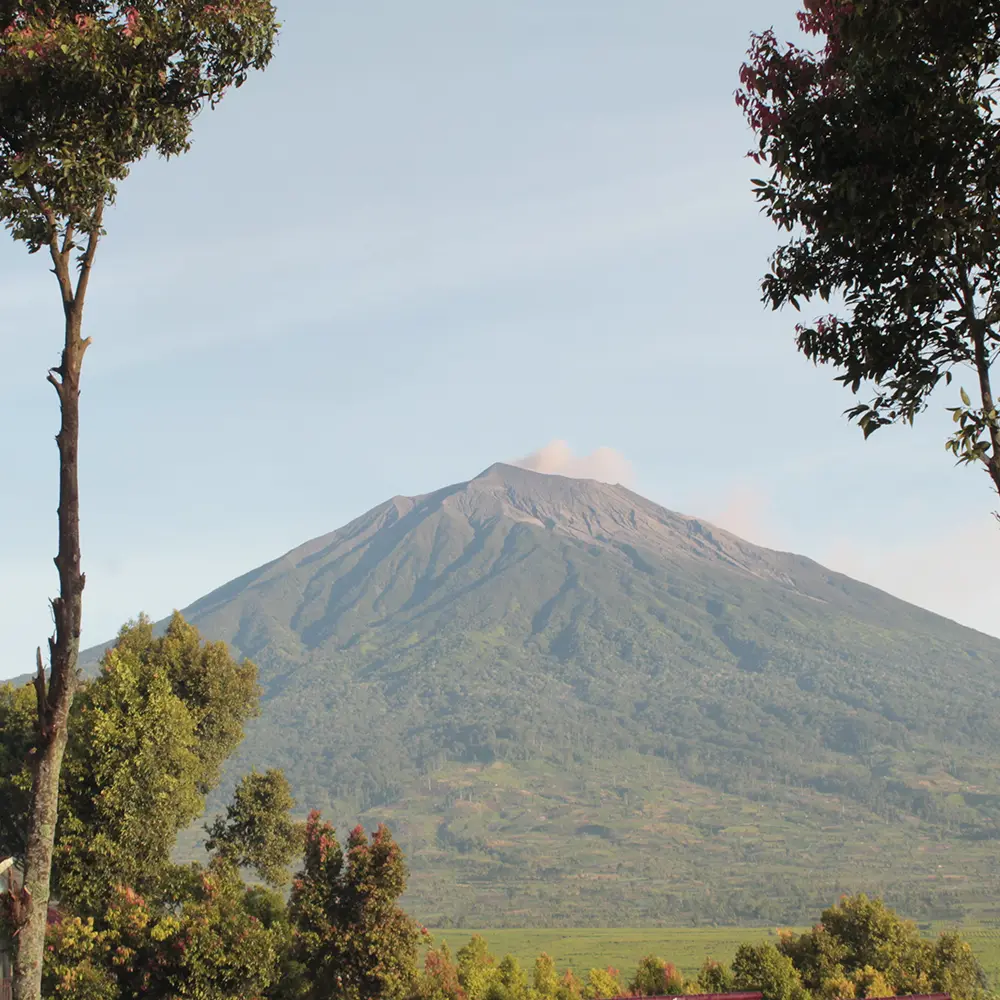
Mount Kerinci is one of the many volcanoes in the Pacific Ring of Fire, a 40,000-kilometre-long, horseshoe-shaped belt of 452 volcanoes where eruptions and tectonic plate movements unfold in an almost constant dance. Kerinci’s past eruptions have created a lush, green landscape with deep layers of fertile volcanic soil.
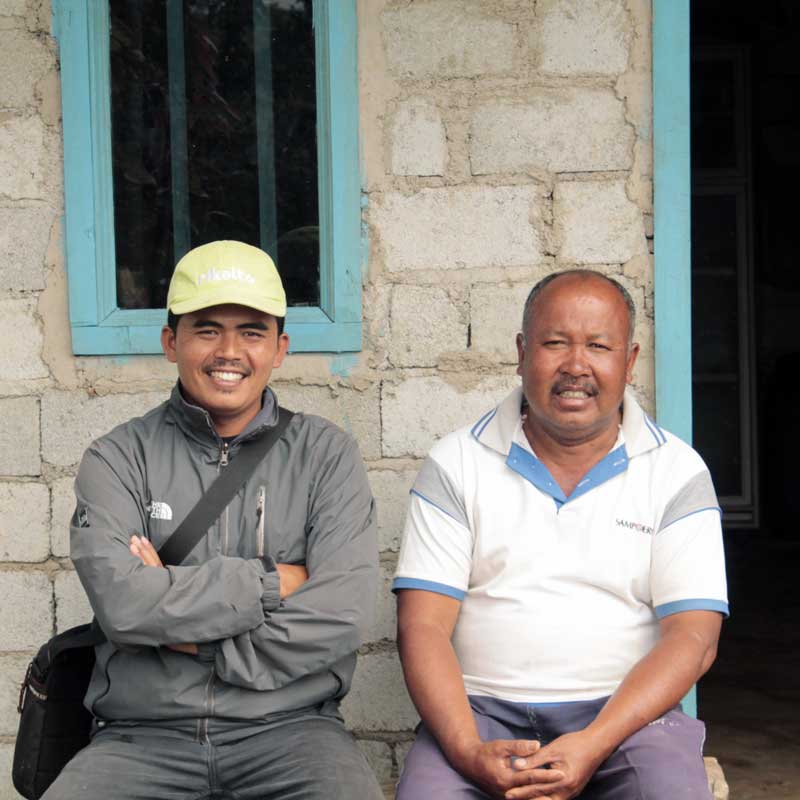
The cooperative is managed by Triyono, who leads members in processing and roasting their own coffees. They have a fully outfitted roasting facility, including a cupping lab, next to the dry mill.
Almost all farms on Sumatra are small. On average, farms are between 0.5 to 2.5 hectares. Coffee is usually the primary cash crop for farmers, but most also intercrop their trees alongside vegetables, potatoes and fruit. This intercropped produce will make up a substantial part of the family’s diet for the year.
In addition to growing coffee as a cash crop, many smallholder farmers also work as hired laborers at nearby tea plantations. Like coffee, tea is a huge cash crop in the area. The bigger tea plantations are often near coffee farms. When the harvest is finished, coffee farmers will go there and pick leaves under contracted labor.
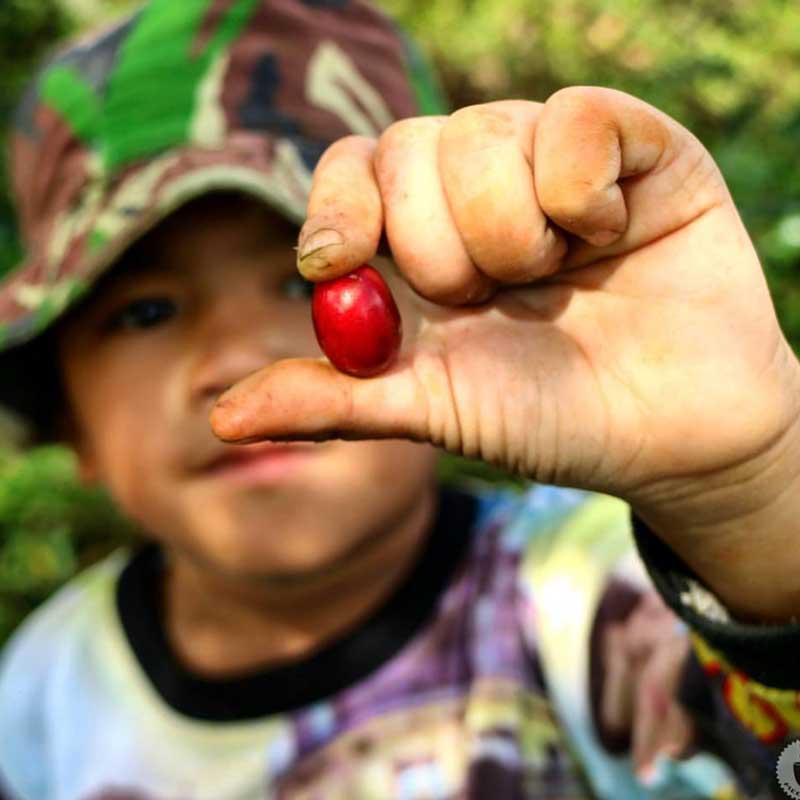
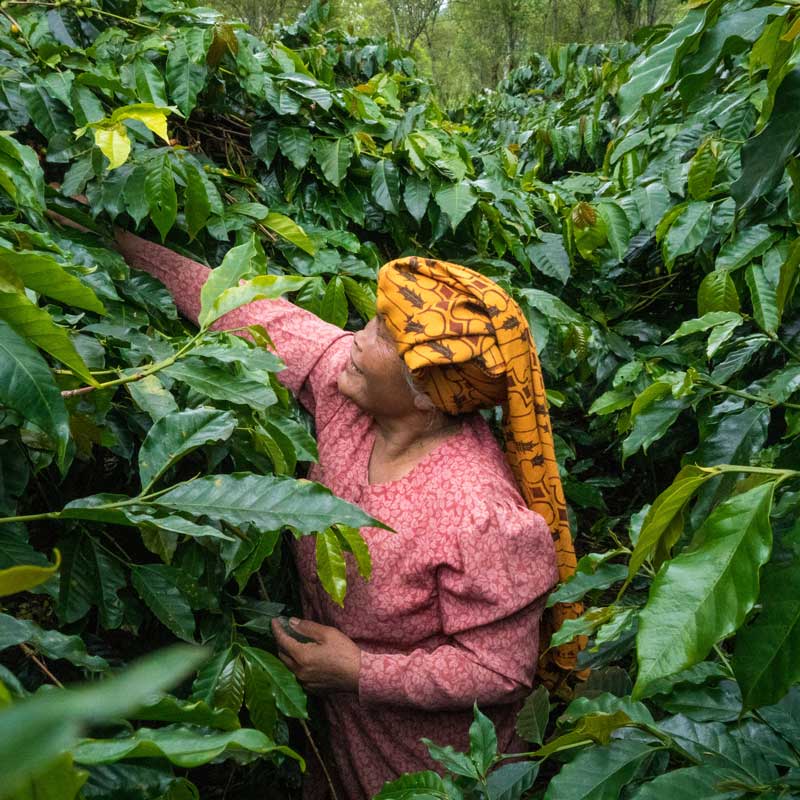
During the harvest season, coffee is handpicked. Usually, most labor is supplied by the immediate family.
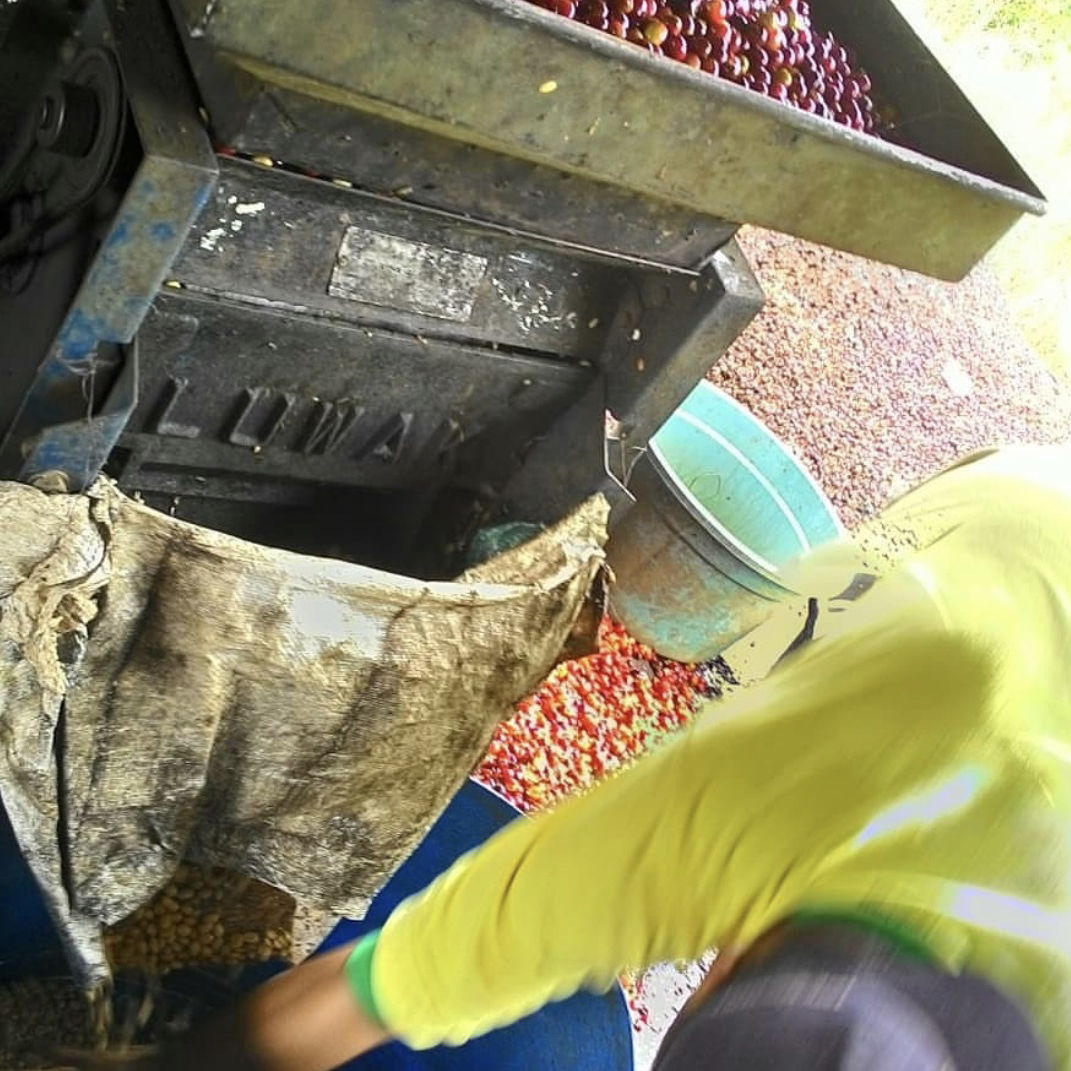
Efter plockningen levereras kaffebären till en av kooperativets uppsamlingscentraler, som kallas UPH. Här köper kooperativet in bären och förädlar kaffet innan det transporteras vidare till den centrala tvättstationen. Triyono ansvarar för verksamheten vid och omkring kooperativets nio UPH-stationer.
To streamline the operation, there is an agriculturalist providing technical assistance to make sure the same, standard procedures are used to process cherry at each of the different stations. Each UPH is located in a different area and receives cherries from different farmer groups.
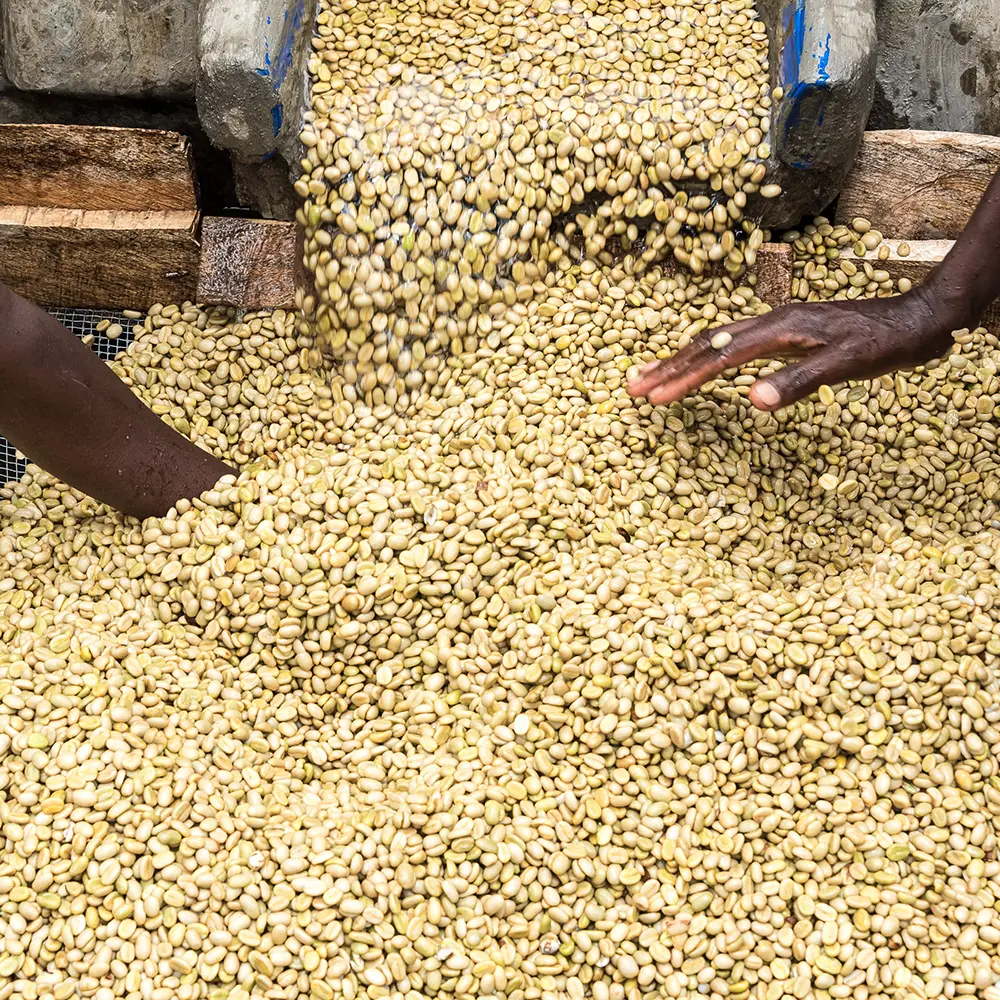
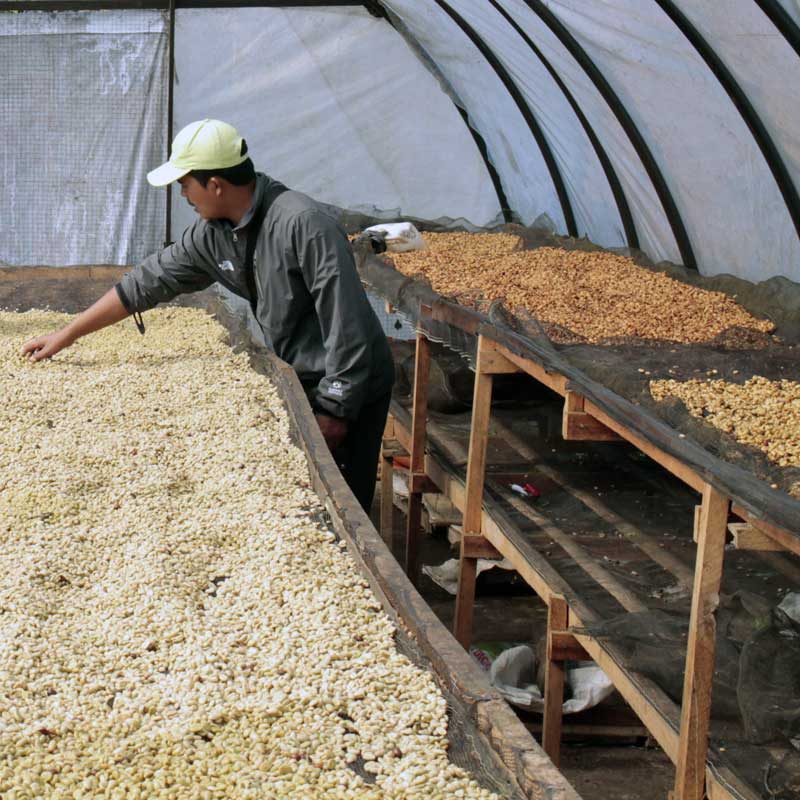
ndonesia is known for its unique ‘Wet Hulled’ Process (Giling Basah). Giling BasahTryiono and his team are expanding Indonesia’s coffee processing traditions. With this Fully washed lot, the coffee is pulped and then left to ferment overnight in buckets. It is washed the next day and agitated to remove the mucilage. The coffee is first dried on patios. Afterward, it is transferred to raised beds. The beds are located in domes to protect the coffee from rain or harsh sunlight. When dry, the coffee is milled and sorted by hand
As members of the coop, farmers have a fixed buyer for their cherries. At the end of the year, the coop invests its profits in either infrastructure to increase quality or shares them as quality premiums with the member producers.
| Weight | 0.25 kg |
|---|---|
| Country | Indonesien – Sumatra |
| Producer | Family farms – Koerintji Barokah Bersama Cooperative |
| REGION | Kerinci |
| Altitude | 1400-1700 metre |
| Cultivar | Andung Sari, Sigarar Utang |
| Process method | Fully Washed / Wet Processed |
| Drying Method | Torkbord |
| harvest period | July 2026 |
| Lot-size | 300 kilo |
GRINGO'S TERMS OF PURCHASE
- Free shipping over SEK 350 (otherwise SEK 65) in Sweden
- International shipping depends on country
- DELIVERY 2-3 DAYS DOMESTIC