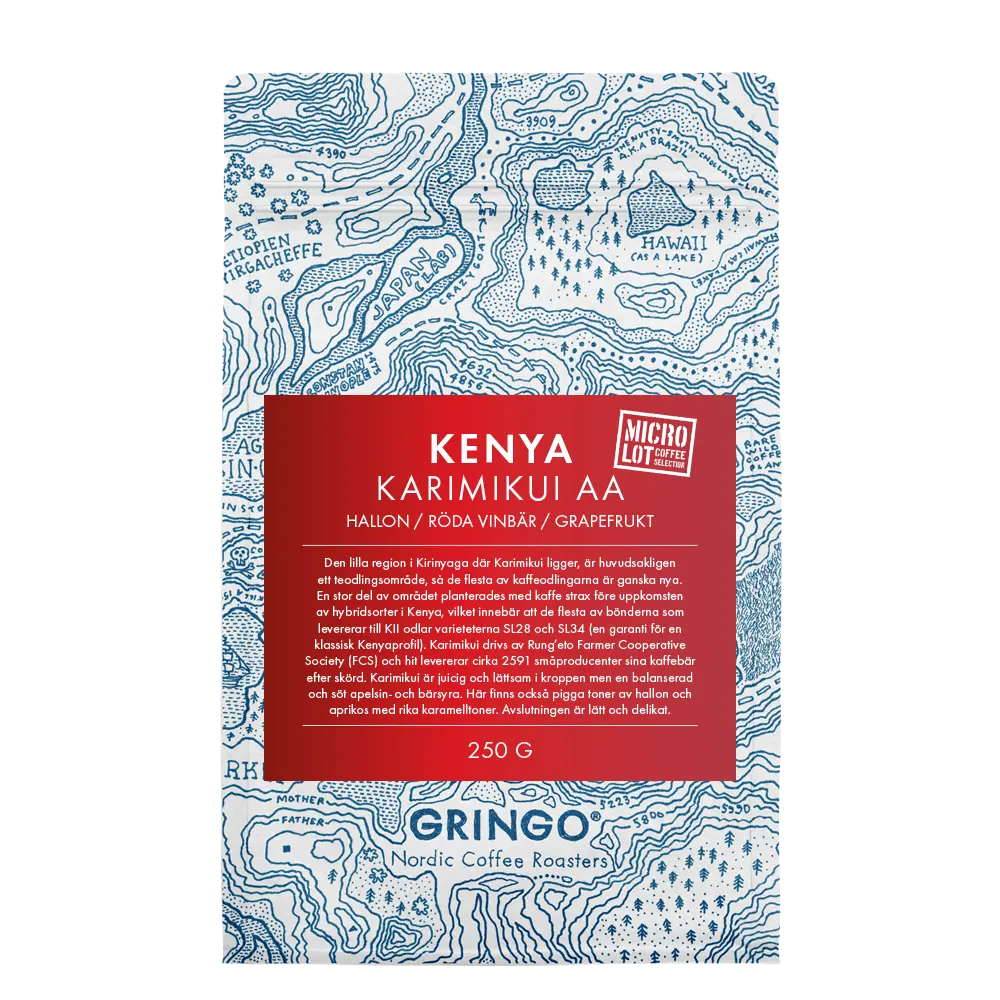
Kenya Gititu AA
Whole Beans 250 grAM
189.00 kr
We’ve long had a soft spot for coffee from Kiambu, and this lot is no exception. In the cup, we find a deep, classically Kenyan flavour profile with notes of blackcurrant and redcurrant, tea, grapefruit and hibiscus, alongside vibrant fruitiness and a delicate berry sweetness. A bright, refreshing acidity ties it all together.
Gititu Farmers Cooperative Society (FCS) and its washing station are located just north of Nairobi, south of Mount Kenya. Founded in 1954, the cooperative is one of the oldest in the country. Gititu values openness and transparency, inviting its members to attend auctions at the Nairobi Coffee Exchange to gain a better understanding of how their coffee is sold.
ABOUT GITITU & THE KIAMBU REGION
Gititu’s washing station was built in 1954 and was the first within the Gititu FCS Ltd cooperative. The cooperative has a total of eight washing stations and over 7,000 members. It is run by a nine-member management committee and a three-member supervisory board.
The name “Gititu” comes from the Kikuyu word for “big forest” and refers to the vast forests that once covered Kiambu. Grown in a region with a long tradition of coffee cultivation, this coffee has a classic Kenyan flavour profile with distinct notes of blackcurrant and redcurrant.
The areas surrounding Gititu’s washing station typically lie at 1,600–1,700 metres above sea level on the slopes of the Aberdare Range. Altitude plays a crucial role: the coffee cherries ripen more slowly, giving sugars and acids time to develop. This contributes to the bright, wine-like flavours with distinct citrus and currant notes that make Kiambu’s coffee so highly regarded.
14:40 The region has two rainy seasons. The longer season runs roughly from March to May, while the shorter one lasts from October to December. Coffee trees flower when rain follows a dry spell. This means Kiambu typically has a main harvest from October to January, with the possibility of a smaller crop around the middle of the year. Temperatures of 15–24 °C and deep, well-drained, humus-rich red clay soils, classified as nitisols, provide excellent natural conditions. However, the growers’ work and farming practices are essential to realising this potential.
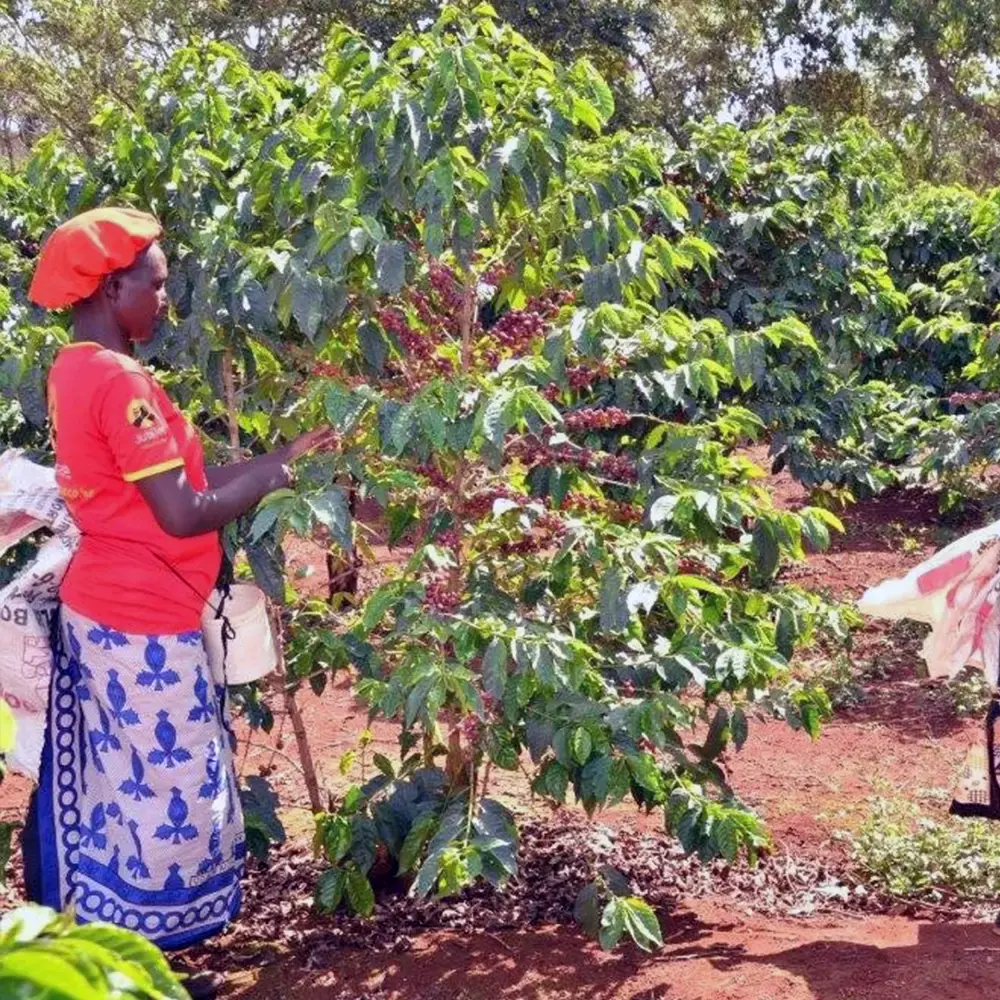
Kiambu is also known as Kenya’s largest milk-producing county. Many coffee growers in the region use organic fertilisation methods, applying only cow manure to their coffee trees rather than agrochemicals.
HOW THE COFFEE IS PRODUCED
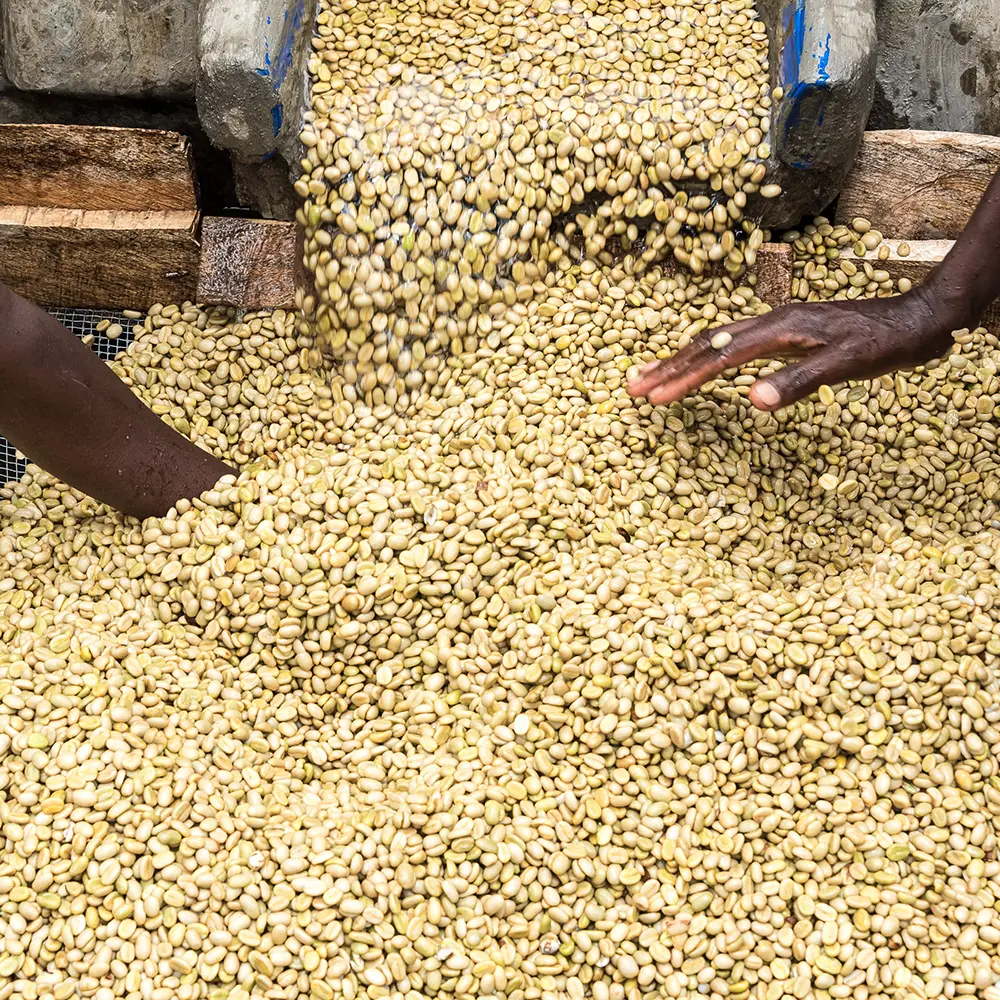
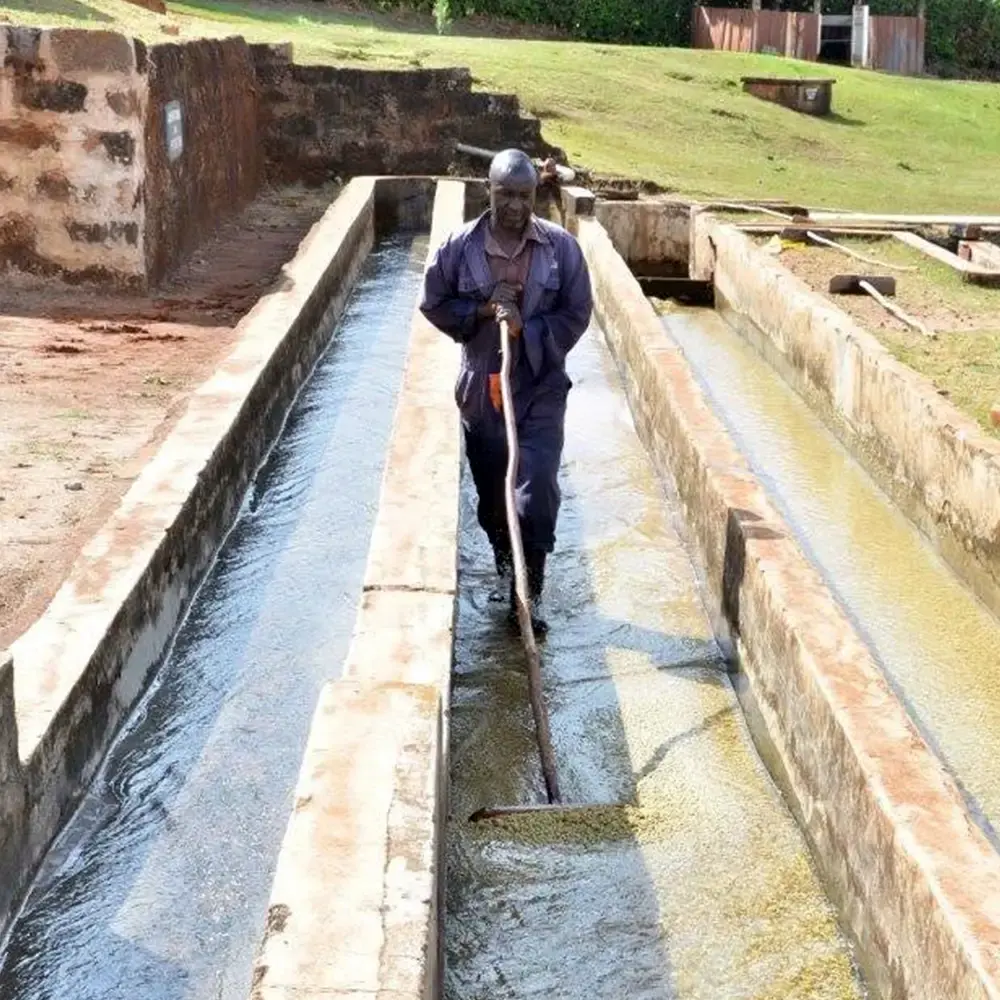
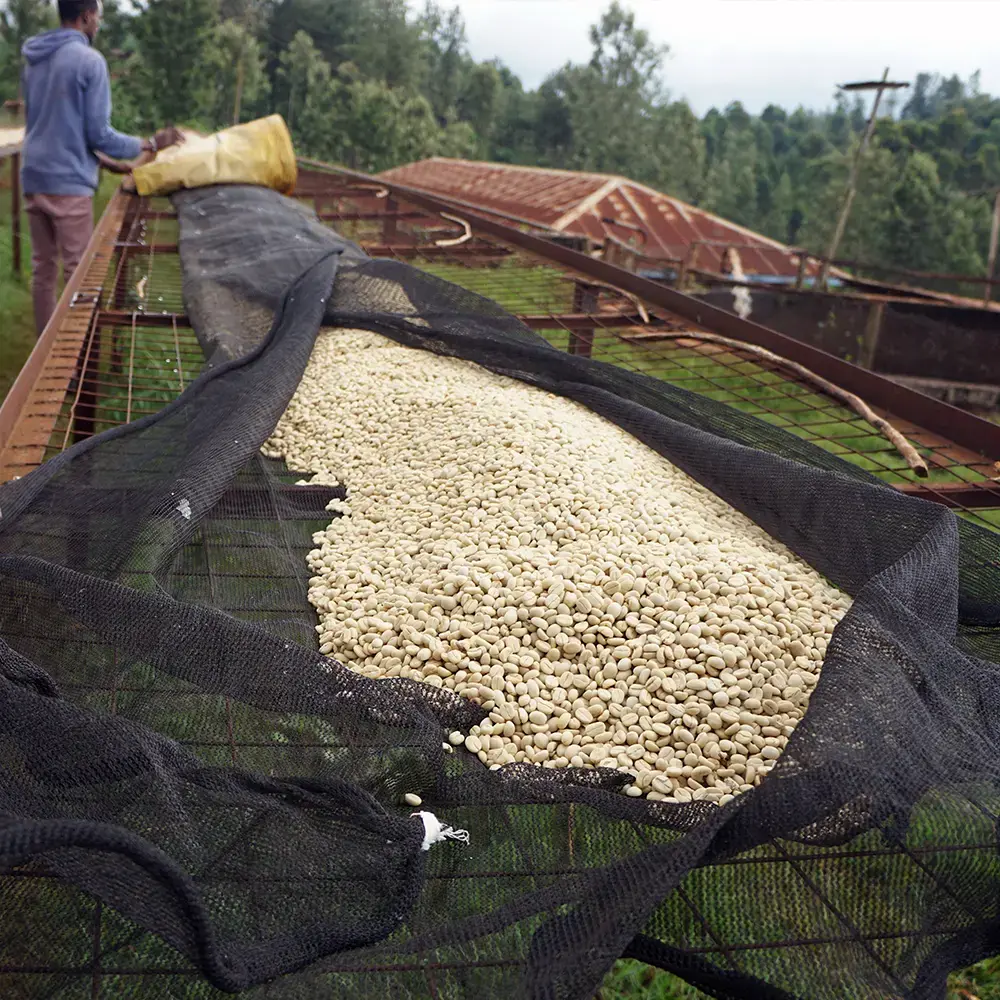
The skins and pulp are then removed, and the coffee is fermented for 12–24 hours, depending on the weather. After fermentation, it is washed with clean water and graded to ensure consistent quality. The beans, still enclosed in their parchment layer, are then spread out on raised drying beds or in greenhouse-style solar dryers.
During drying, the coffee is turned regularly to ensure it dries evenly. During the hottest hours of the day, it is covered with tarpaulins to keep drying slow and even. It is also covered at night to protect it from moisture. Drying takes approximately 7–21 days. Once dry, the coffee is packed into bags, the parchment layer is removed, and it is ready for export.
MORE ABOUT THE COFFEE CLASSIFICATION OF COFFEE IN KENYA
-
Kenya AA – the largest beans, measuring 17/18 (over 7.2 mm). Only AA beans are used in this coffee.
-
Kenya AB - slightly smaller beans, 15/16 in size
-
Kenya PB (Peaberry) where only one round bean developed in the cherry instead of two flat ones
This meticulous attention to every stage of production—from variety selection to processing—is a key reason why coffees from Kenya, and particularly those produced at factories like Karimikui, are regarded as some of the finest in the world.
COFFEE IN KENYA
Though coffee growing had a relatively late start in Kenya, the industry has gained and maintained a impressive reputation and is now recognised by its very high quality, meticulous preparation and exquisite flavors.
Today, more than 600,000 smallholders farming fewer than 5 acres compose 99% of the coffee farming population of Kenya. Their farms cover more than 75% of total coffee growing land and produce nearly 70% of the country’s coffee. These farmers are organized into hundreds of Farmer Cooperative Societies (FCS), all of which operate at least one factory. The remainder of annual production is grown and processed by small, medium and large land estates. Most of the larger estates have their own washing stations.
| Weight | 0.25 kg |
|---|---|
| Country | Kenya |
| Producer | Gititu Factory |
| REGION | Kiambu |
| Altitude | 1600-1700 metre |
| Cultivar | Batian, Ruiru 11, SL28, SL34 |
| Process method | Fully Washed, double wash |
| Drying Method | Sun on raised beds |
| harvest period | December 2025 |
| Lot Size | 300 kilo |
GRINGO'S TERMS OF PURCHASE
- Free shipping over SEK 350 (otherwise SEK 65) in Sweden
- International shipping depends on country
- DELIVERY 2-3 DAYS DOMESTIC