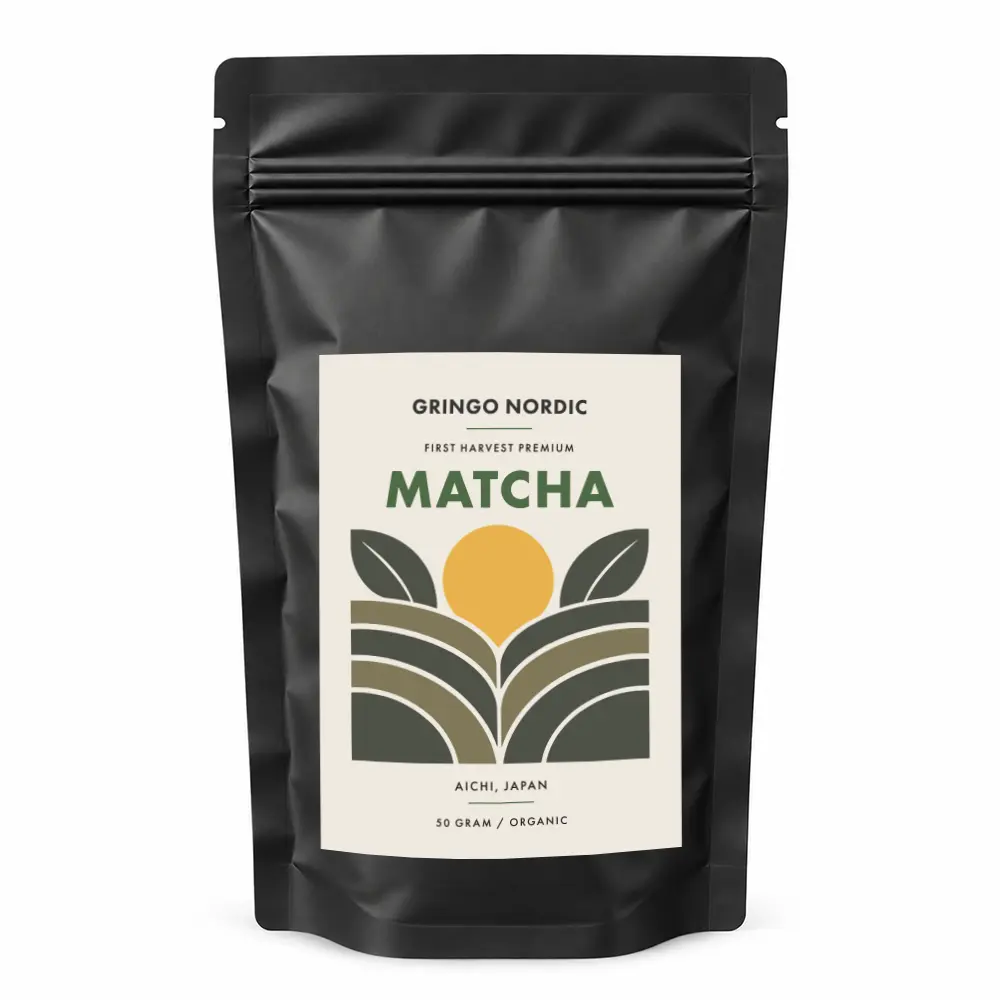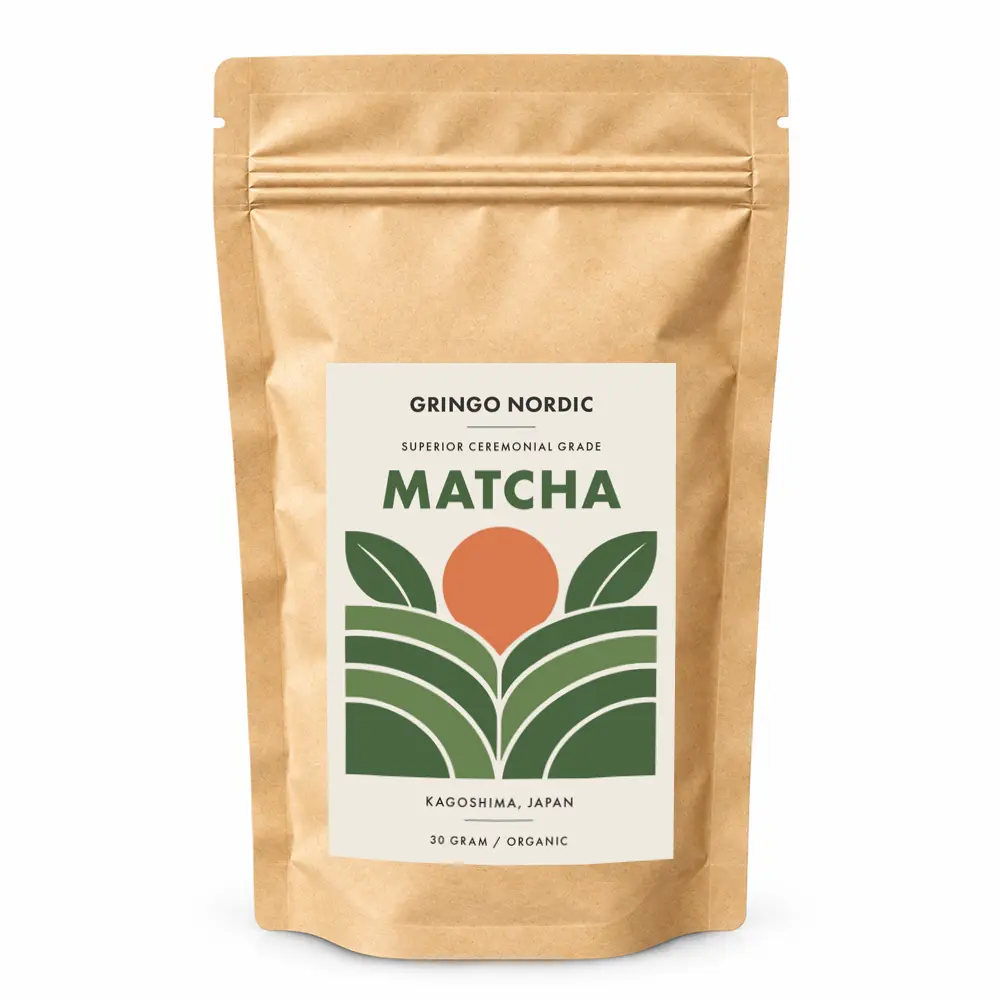
Gringo Superior Ceremonial Grade MATCHA
349.00 kr
Our organic Superior Ceremonial Grade Matcha comes from the first spring harvest, ichibancha, in Kagoshima in southern Japan. Kagoshima's warm climate means the harvest begins early in spring, when the leaves are young and tender. Only the youngest leaves are hand-picked. The tea is made from the Saemidori cultivar, known for its natural sweetness, low bitterness and distinct umami. The colour is a vivid jade green.
Before harvest, the tea bushes are shaded for several weeks. The reduced sunlight tempers the development of bitterness and astringency, while enhancing the leaves' umami and green colour. After picking, the leaves are steamed, dried without being rolled, and stripped of stems and veins. The remaining leaf material is called tencha, which is then slowly stone-ground into a very fine powder, traditionally between granite millstones.
Superior Ceremonial Grade Matcha has a delicate, lightly sweet flavour and a velvety texture. It is perfect for traditional preparation, both usucha and koicha, and can of course also be used in a luxurious matcha latte.
USUCHA OCH KOICHA
Usucha and koicha are two traditional ways to prepare matcha:
- Usucha means “thin tea”. The matcha is whisked with a larger amount of water to create a light, airy drink topped with a fine layer of foam. This is the most common way to drink matcha in Japan.
- Koicha means “thick tea”. It uses considerably more matcha and less water. The tea is slowly kneaded with the whisk rather than whisked into a foam, creating a thick, intense, and velvety consistency.
Koicha requires very high-quality matcha, as the concentrated preparation brings out its flavour, sweetness, umami, and any bitterness.
KAGOSHIMA – JAPAN’S MOST IMPORTANT CENTRE FOR MATCHA
Kagoshima has rapidly become one of Japan’s most important centres for tencha and matcha; by 2022, the prefecture was already the country’s largest producer of tencha. Located at the southern tip of Kyushu, Kagoshima enjoys a warm climate, abundant rainfall, and a long growing season. In some areas, the first harvest begins as early as late March or early April. The region encompasses both open farmland well suited to mechanised cultivation and cooler highland areas such as Kirishima.
HOW IS OUR MATCHA PRODUCED IN KAGOSHIMA?
SHADE GROWN
A few weeks before harvesting, the tea bushes are covered to reduce the amount of sunlight reaching the leaves. Shading increases chlorophyll levels and helps preserve amino acids such as theanine. The result is darker leaves, more pronounced umami, and less astringency.
AFTER THE HARVEST
- Bladen ångas snabbt för att stoppa oxidationen.
- Bladen torkas utan att rullas, till skillnad från sencha.
- Stjälkar och grövre bladnerver avlägsnas.
- Det återstående bladmaterialet kallas tencha.
- Tenchan stenmals långsamt mellan granitstenar till ett mycket fint pulver.
OTHER
Ursprung: Kagoshima, Japan
Cultivar: Saemidori
Skörd: Ichibancha (vårens första skörd)
Malning: Stenmald i granitkvarn
Ingredients: Ekologiskt grönt te (matcha)
Content: 30 gram (ca 15-20 serveringar usucha)
Perfect for: Usucha och koicha
Bäst före: Se förpackning
Storage: Store in a cool, dry, dark place.
Consume within: 1 month after opening of bag
HOW TO PREPARE YOUR MATCHA
- Usucha (hot): Sift about 2 g of matcha into a bowl. First, whisk with a splash of cold water into a smooth paste. Then pour in about 100 ml of water at around 80°C and whisk briskly in an M or W motion until the surface is covered with an even, fine foam.
- Koicha: Sift about 3-4 g of matcha into a bowl and add about 30-40 ml of water at around 80°C. Knead slowly with the whisk in circular motions until the tea is thick, glossy and completely free of lumps.
- Latte: Sift about 3-4 g of matcha into a cup or bowl. Add a small splash of water, about 10 ml at around 80°C, and stir or whisk into a thick, smooth paste with no lumps. Then add another 20-30 ml of water and whisk briskly back and forth into an even matcha base. For a hot latte, top the base with about 150-200 ml of hot, frothy milk. For an iced latte, fill a glass with ice and about 150-200 ml of cold milk, then pour the base over. We think oat milk works best, but feel free to adjust the amount of matcha and milk to your taste and experiment until you find your favourite.
GRINGO'S TERMS OF PURCHASE
- Free shipping over SEK 350 (otherwise SEK 65) in Sweden
- International shipping depends on country
- DELIVERY 2-3 DAYS DOMESTIC